Hello. Welcome.
Recently arrived in Geneva, I’m a marketing and communications professional experienced in creating and delivering industry-focussed campaigns.
On this site you will find some examples of my work.
Graphic design



Booklet
Social media




Newsletter
Embedding digital innovation into your business
Will your current business model still be economically viable in 2025? According to McKinsey & Company, many businesses (over 75% of those surveyed) believe that theirs won’t.
It can be a challenge to keep pace with the constantly changing landscape, especially within the digital space. Sometimes organisations lack access to the necessary knowledge, expertise and perspectives to create lasting change and develop more resilient business models.
This month we look at ways that companies can work with partners to expand their innovation capacity, access new ideas and ultimately make meaningful change to their customers, their business plans and the world.
How do innovative companies leverage tech to outperform?
Over the next few years generative AI and other new technologies are poised to disrupt industry. Many organisations are adopting initiatives to address this, but do truly innovative organisations embrace new technologies in distinct ways?
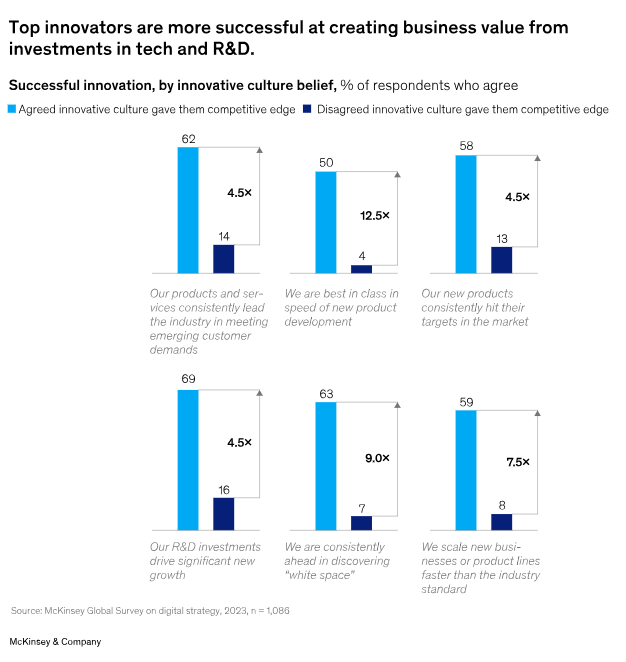
A recent McKinsey & Company survey found that it’s not enough to simply pursue new technologies through strategy, it’s organisational culture that drives innovation success. The digital innovations of organisations with a strong innovation culture had double the impact of their competitors.
And it pays to take a systematic and intentional approach to cultivating an innovation-focused culture. Innovative companies are 10 times faster at developing new products than weaker innovators. They have a 6-fold lead on their ability to scale new business and their outputs are 3 times as likely to actually meet their customers’ needs. They are also 10 times more likely to be overall economic outperformers.
What sets innovative companies apart is their holistic commitment to innovation. They recognise that making innovation a core corporate value is key and invest in research, championing and rewarding experimentation.
But how can you rapidly make this kind of transformative change to your organisation? One option could be increasing your innovation capacity through collaboration.
How can companies explore novel applications of their technologies?
When thinking of AI, often chatbots like Chat GPT or assistants like Alexa and Siri come to mind. But what if AI-enabled tech could go far beyond this?
What if we could use AI to swiftly provide prostheses for people injured in warzones? To alleviate phobias or to support people experiencing menopause?
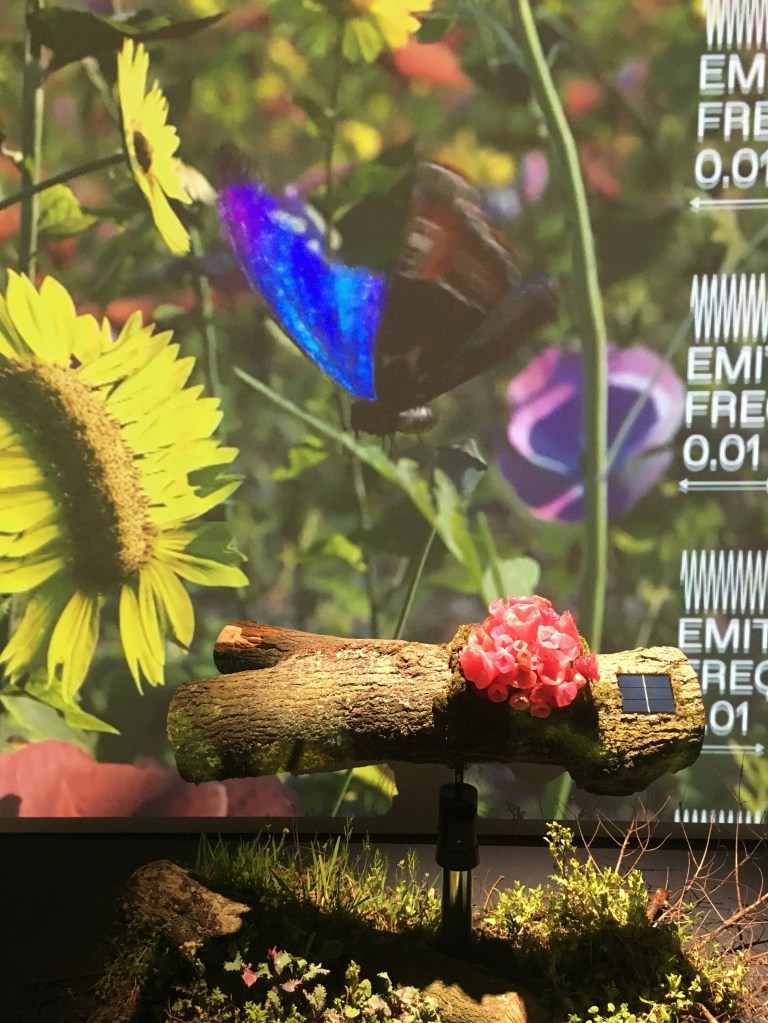
Our MA Material Futures course has worked with Google DeepMind on a variety of projects exploring the potential of new technologies. Last year, students turned their attention to AI, and developed novel and unexpected interpretations of its potential.
Design students provided a fresh perspective on the use of AI, coming up with a host of concepts that went on display in our Lethaby Gallery here in Granary Square in the Model Machines exhibition last April.
Experimenting with emerging technology
We know that innovative companies invest in R&D and experimentation, but what if you don’t have the in-house space, capacity or expertise to do this?
Collaboration, especially with a college or university, is a great way to access cutting edge research and workshop or laboratory space that your organisation may not have access to. Working with higher education is also a great way to access the fresh perspective of a Gen Z audience – digital natives who are simultaneously content consumers and creators with a passion for exploring creative ways to express themselves through emerging tech.
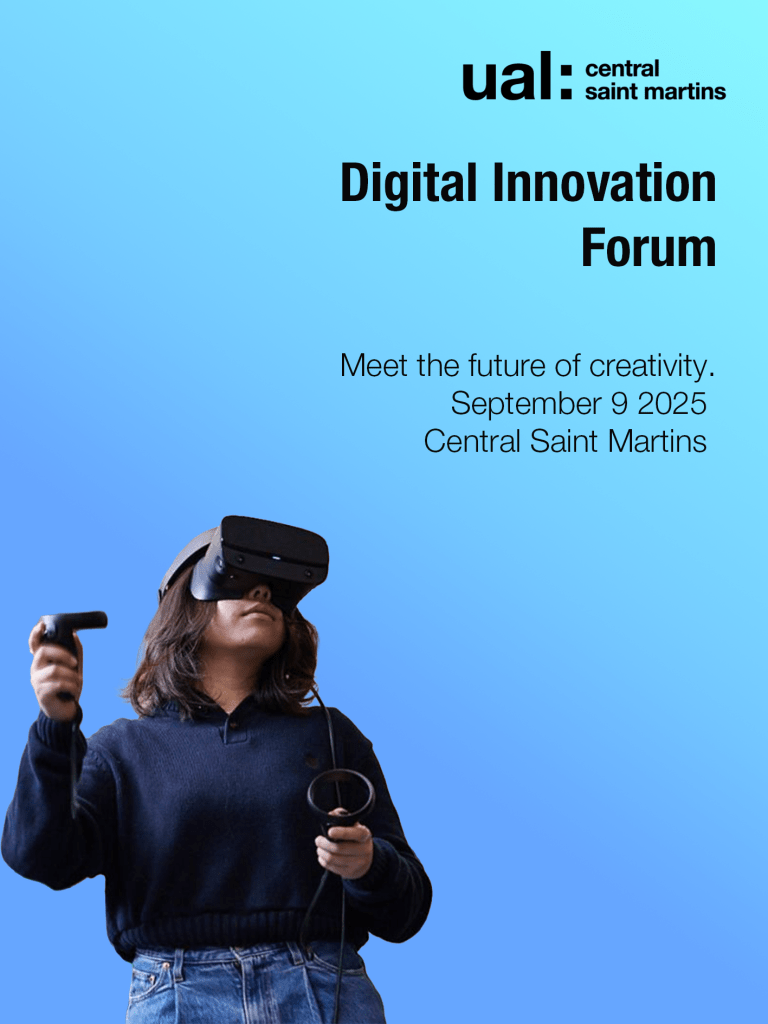
At Central Saint Martins, we’ve delivered several iterations of our Digital Innovation Season – a programme of events that explore and celebrate creativity in the digital space through an inspiring series of public talks and student workshops. Students, academics and industry together explore how new technologies are changing are future.
This year our Digital Innovation Season is centred around planetary sensing. Planet Earth ‘senses’, understands and communicates through arrays of satellites, sensors, swarms and servers that shape geographies, climate, science and societies. So, how are these technologies impacting our environment? And how might they help with the ecological crisis?
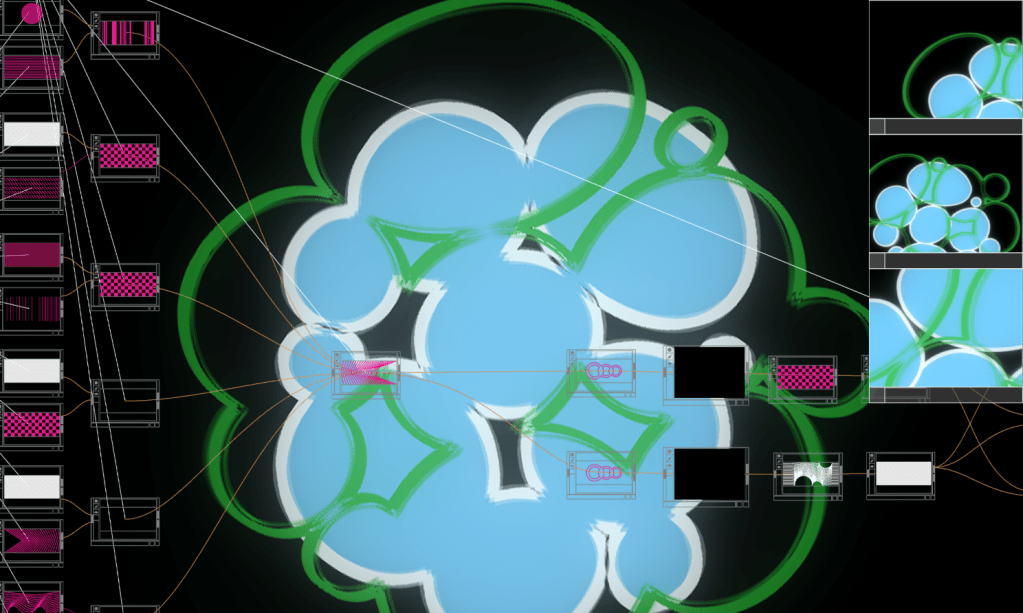

Our first online public talk will be Planetary Sensing and the Whole Earth Codec. Whilst observatories gaze outwards to the stars, the recent proliferation of planetary sensor networks has inverted our gaze towards Earth. Could we configure the entire earth as a distributed observatory? Join University of Oxford doctoral student, Christina Lu, and media artist, Connor Cook on February 1 online from 6pm GMT.
In 2022, the Digital Innovation Season explored biology, engineering and robotics through art and design. Students, researchers and industry professionals interrogated the relationship between digital tech and physical environments and explored how tech impacts nature and all living creatures.

